Many American women diagnosed with early-stage breast cancer opt for more aggressive treatment than necessary, while many Americans with advanced kidney disease resist even minimal treatment.
A new look at brain-activity patterns of sober alcoholics could help scientists understand, and better treat, the underlying neurobiology of addiction.
Candidate's victory speech at the conclusion of the 2008 Iowa Democratic caucus has political scientists comparing it to ones delivered by icons of oratory from years past.
Research using brain-scanning technology finds that images of violence stimulate specific responses in the human brain that do not occur in reaction to other types of imagery.
Take that, hakuna matata. The Disney-fied notion that, left to its own devices, nature will always revert to an idyllic equilibrium is a dangerous fallacy, say two researchers. The cultural bias colors discussions on climate change.
The link between violent media imagery and aggressive behavior is only slightly less strong than the connection between cigarette smoking and lung cancer, according to one University of Michigan psychologist.
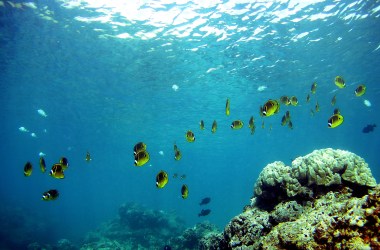
Reports show that the ocean's unique ecosystems are adapting to fluctuations in water temperatures likely caused by global warming, but increasing acidic levels may prove fatal for the world's coral reefs.
A round-up of research taken in the wake of the Bali summit on climate change finds little to warm the heart with the one exception that Atlantic hurricanes may grow more numerous but less fierce.
The touted AMBER Alert system is so inherently flawed it amounts to little more than "crime-control theater," according to a new report by researchers at the University of Nevada–Reno.