

Since We Last Spoke: Military Policing

Updates to stories from the Pacific Standard archive.
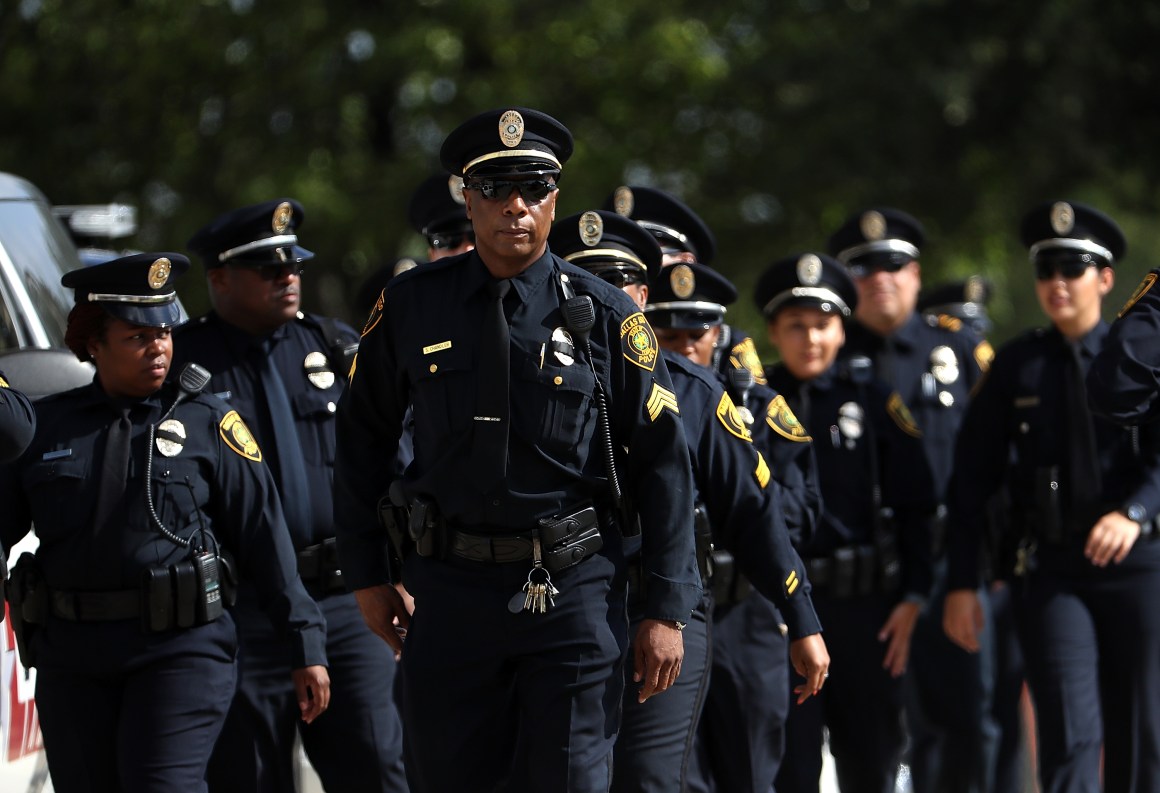
Police officers.

Researchers have long speculated that a militarized police force puts both cops and communities in greater danger. As Jared Keller reported for Pacific Standard in 2015, studies show that the mere presence of weapons can incite violence.

Apparently President Donald Trump did not get that memo. In August, Trump signed an executive order reviving a program to transfer surplus military gear to state and local police departments. The program was curtailed in 2015, after photographs of police responding to the protests in Missouri in armored vehicles sparked public outcry.

It’s easy to see why it’d be harder to engage with the public (and de-escalate dangerous situations) from atop a tank. Effective policing requires the trust of the community being policed.

A version of this story originally appeared in the December/January 2018 issue of Pacific Standard.
Related Posts

Prisons have no incentive to pay inmates better—to the contrary. Unlike workers in the free market, who (theoretically, anyway) can weigh factors like pay, working conditions, and other benefits when deciding where to work, inmates do not have a choice between employers. If they need the money, or the experience, they must take or leave what the prison is offering.

The Death Penalty in America: A Lethal History

In colonial Virginia, authorities could hang settlers for a crime as small as stealing grapes or killing a neighbor's chicken. The penal code in America's first colony was, in fact, so harsh its governor eventually reduced the number of capital offenses out of fear that settlers would refuse to live there. Since then, the number and severity of crimes punishable by death in the United States have fluctuated; today, the death penalty is still legal in 31 states. Here are some of the critical turning points in the history of capital punishment in America.
See More