

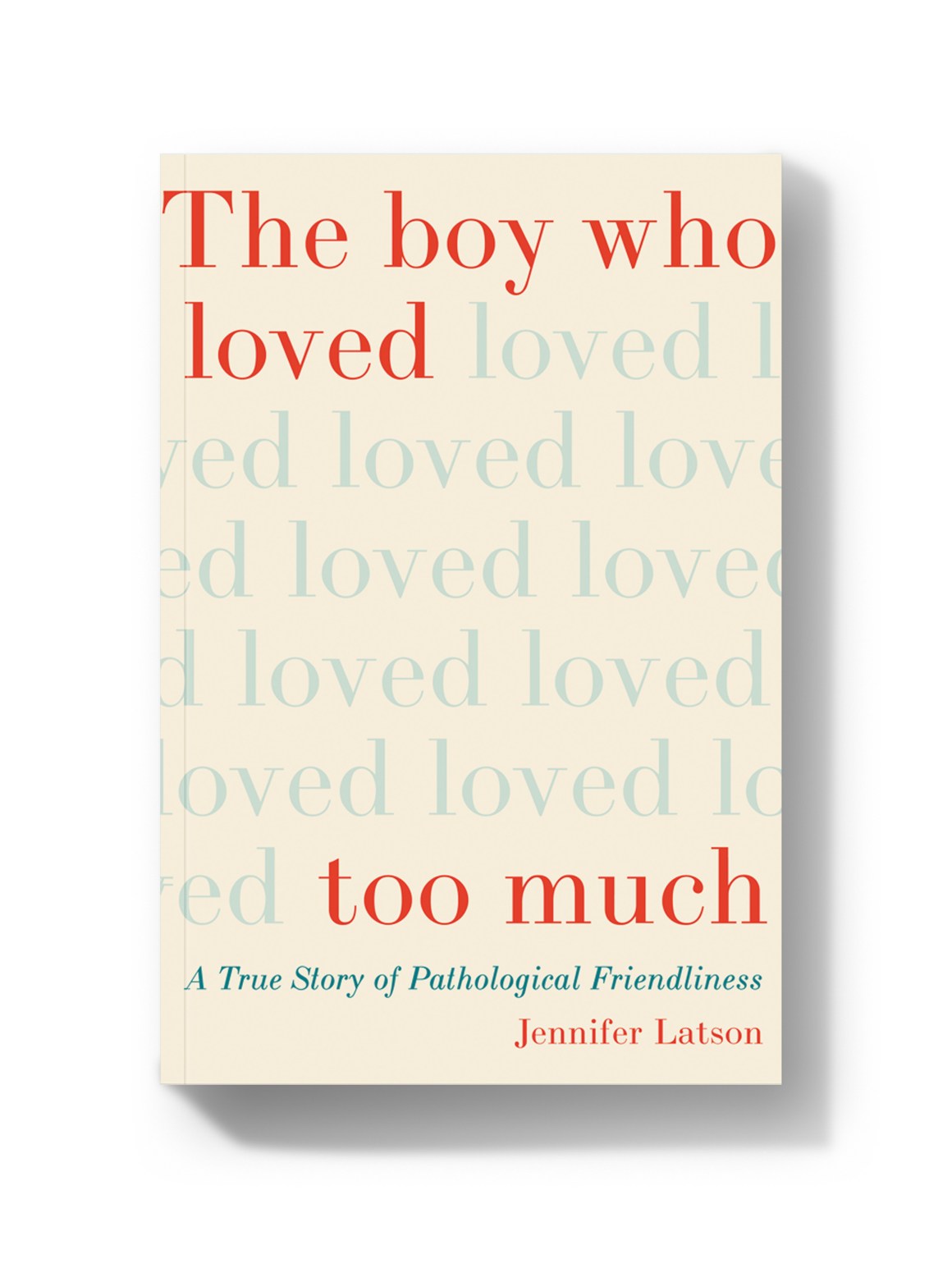
A True Story of Pathological Friendliness

Jennifer Latson’s debut illustrates a boy’s coming-of-age, complicated by a genetic disorder that strips peoples’ social inhibitions.
The Boy Who Loved Too Much: A True Story of Pathological Friendliness.

The Boy Who Loved Too Much: A True Story of Pathological Friendliness
Jennifer Latson
Simon & Schuster

Jennifer Latson’s impressively intimate debut follows three years in the childhood of Eli, who is one of approximately 30,000 Americans with a genetic disorder called Williams syndrome. People with Williams can have cardiac problems, learning disabilities, motor complications—and a near-total lack of social inhibitions. Hungry for connection and friendship, Eli is irrepressibly open with every stranger he meets; inevitably this backfires, instantly marking him as “different.” Watson intersperses evocative scenes from Eli’s life as he approaches high school with the history of the disorder. The emotional heart of the story is Eli’s relationship with his single mother, Gayle, who struggles with the impossible question of how to protect her too-trusting son while simultaneously preparing him to chart his own path in a world that is often dangerous for its least-skeptical souls.

A version of this story originally appeared in the May/June 2017 issue of Pacific Standard.

Related Posts

Prisons have no incentive to pay inmates better—to the contrary. Unlike workers in the free market, who (theoretically, anyway) can weigh factors like pay, working conditions, and other benefits when deciding where to work, inmates do not have a choice between employers. If they need the money, or the experience, they must take or leave what the prison is offering.

The Death Penalty in America: A Lethal History

In colonial Virginia, authorities could hang settlers for a crime as small as stealing grapes or killing a neighbor's chicken. The penal code in America's first colony was, in fact, so harsh its governor eventually reduced the number of capital offenses out of fear that settlers would refuse to live there. Since then, the number and severity of crimes punishable by death in the United States have fluctuated; today, the death penalty is still legal in 31 states. Here are some of the critical turning points in the history of capital punishment in America.
See More