
Social Networks Can Boost Knowledge, Even on Polarizing Issues
But only if they are structured in a way that deemphasizes users' partisan identities.
HUD's complaint alleges that, by allowing landlords and sellers to choose who sees their ads, the social media platform is fostering housing discrimination.
A second study links use of the social media platform with lower political knowledge.
The social media company says it's working to resolve concerns that the policy will silence countless activists, particularly undocumented people decrying the Trump administration.
A conversation with Siva Vaidhyanathan about why social media platforms aren't doing a better job at removing bigotry and misinformation.
Lack of trust in the news in the U.S. runs deep.
A new book argues that American democracy depends on an unlikely source: the English department.
Technology seat belts could help prevent the next Cambridge Analytica scandal.
Rohit Chopra, the newly installed commissioner of the FTC, is moving for a tougher stance from the watchdog group to push back against Trump's deregulatory agenda.
A new study finds the more people rely on their Facebook feed for news, the less politically knowledgeable they are.
Has Facebook fundamentally transformed human behavior—and is such damage irreparable?
While Facebook must improve its policies in curtailing the spread of hate speech against Muslims in Myanmar, those steps won't address the fundamental drivers of persecution and violence in the region.
News and notes from Pacific Standard staff and contributors.
An exclusive newsletter that gives premium members greater access to Pacific Standard stories, staff, and contributors in their inbox every Sunday morning
We spoke with social-science ethicists about how well Facebook's initiative appears to protect users' privacy. They're skeptical, but still eager to see Facebook data studied.
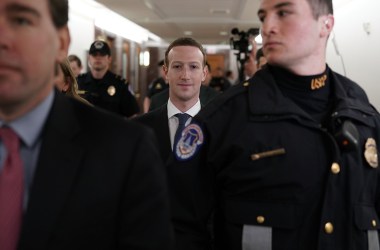
A cybersecurity expert weighs in on this week's Capitol Hill testimonies.
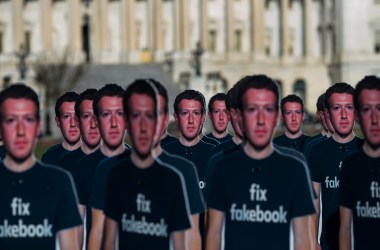
100 life-sized cutouts of Facebook CEO Mark Zuckerberg sit on the lawn of the U.S. Capitol in Washington, D.C.
Attorney General Josh Hawley is demanding answers about the social media company's data-sharing practices with campaigns.
The most disturbing insight into the Facebook-Cambridge Analytica scandal has little to do with either Facebook or Cambridge Analytica.
PS Picks is a selection of the best things that the magazine's staff and contributors are reading, watching, or otherwise paying attention to in the worlds of art, politics, and culture.
Facebook has been under fire since reports surfaced that Cambridge Analytica had obtained data for 50 million Facebook users.
New research offers a step toward understanding how Facebook users find science news in this age of quick content circulation.
Too many tech companies are allowing themselves to become platforms for white-supremacist propaganda.
New research raises the possibility that the more time we spend on Facebook and Twitter, the less safe we feel.