

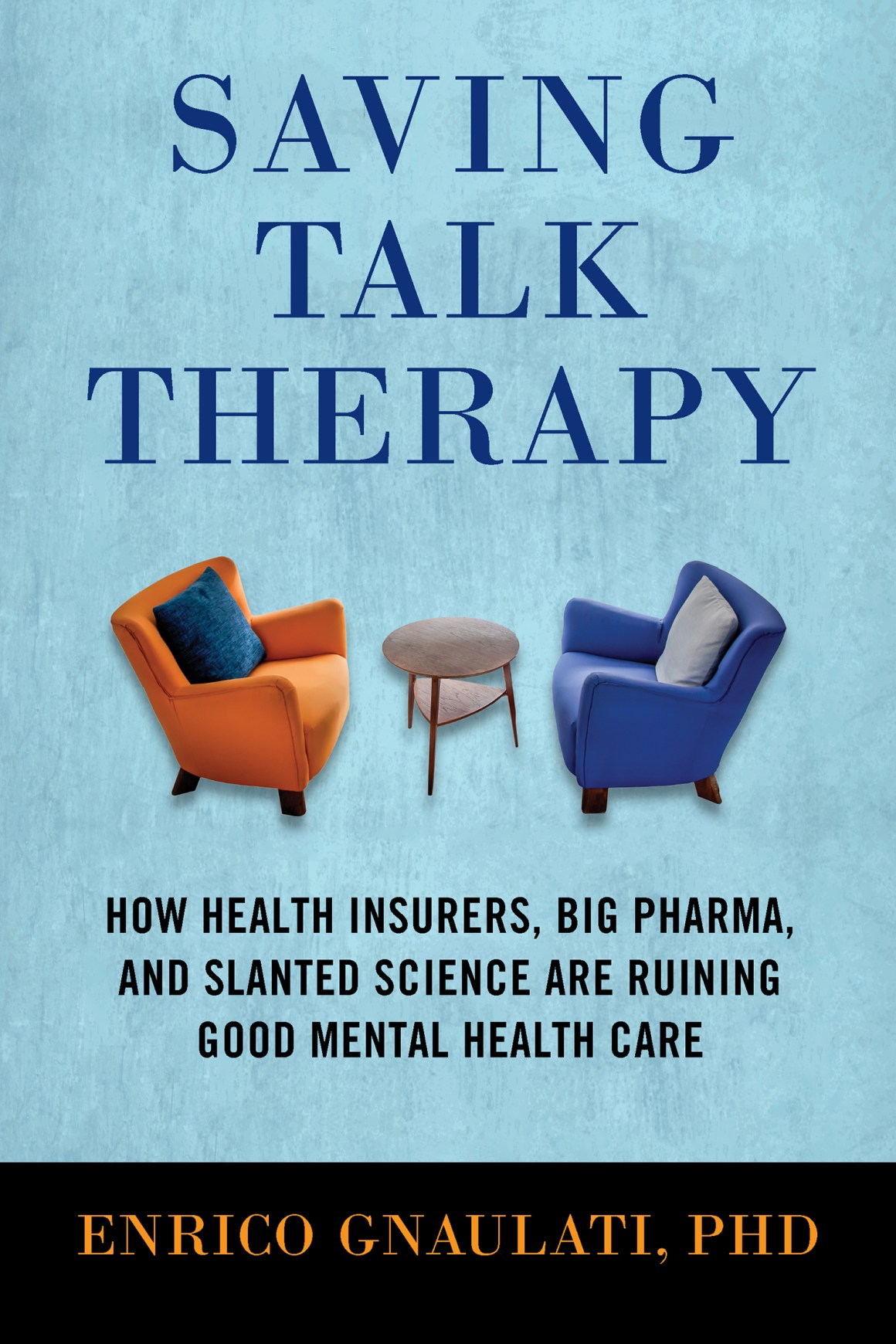
How Health Insurers, Big Pharma, and Slanted Science Are Ruining Good Mental Health Care

In Saving Talk Therapy, Enrico Gnaulati argues that in-depth, long-term, interpersonal psychotherapy remains one of the best tools for alleviating emotional suffering.
Saving Talk Therapy: How Health Insurers, Big Pharma, and Slanted Science Are Ruining Good Mental Health Care.

Saving Talk Therapy: How Health Insurers, Big Pharma, and Slanted Science Are Ruining Good Mental Health Care
Enrico Gnaulati
Beacon Press

The veteran psychotherapist Enrico Gnaulati is scared for the health of his profession. In Saving Talk Therapy, he makes the case that in-depth, long-term, interpersonal psychotherapy remains one of the best tools for alleviating emotional suffering, helping people flourish, and reducing overall medical spending. But this type of therapy is increasingly difficult to access, and Americans are more likely to be prescribed medication or short-term cognitive behavioral therapy.

Gnaulati’s analysis of the historical forces and blinkered thinking behind this shift, while not particularly deep, is cogent and accessible to a non-specialist readership. The lifeblood of the book, however, is his unabashed passion for therapy as a humanistic art form and a social good, and the moving stories he shares from his decades as a practitioner.

A version of this story originally appeared in the December/January 2019 issue of Pacific Standard.


Related Posts

Prisons have no incentive to pay inmates better—to the contrary. Unlike workers in the free market, who (theoretically, anyway) can weigh factors like pay, working conditions, and other benefits when deciding where to work, inmates do not have a choice between employers. If they need the money, or the experience, they must take or leave what the prison is offering.

The Death Penalty in America: A Lethal History

In colonial Virginia, authorities could hang settlers for a crime as small as stealing grapes or killing a neighbor's chicken. The penal code in America's first colony was, in fact, so harsh its governor eventually reduced the number of capital offenses out of fear that settlers would refuse to live there. Since then, the number and severity of crimes punishable by death in the United States have fluctuated; today, the death penalty is still legal in 31 states. Here are some of the critical turning points in the history of capital punishment in America.
See More