

Since We Last Spoke: Cruising Over the Troubled Waters of the Northwest Passage

Updates to stories from the Pacific Standard archive.
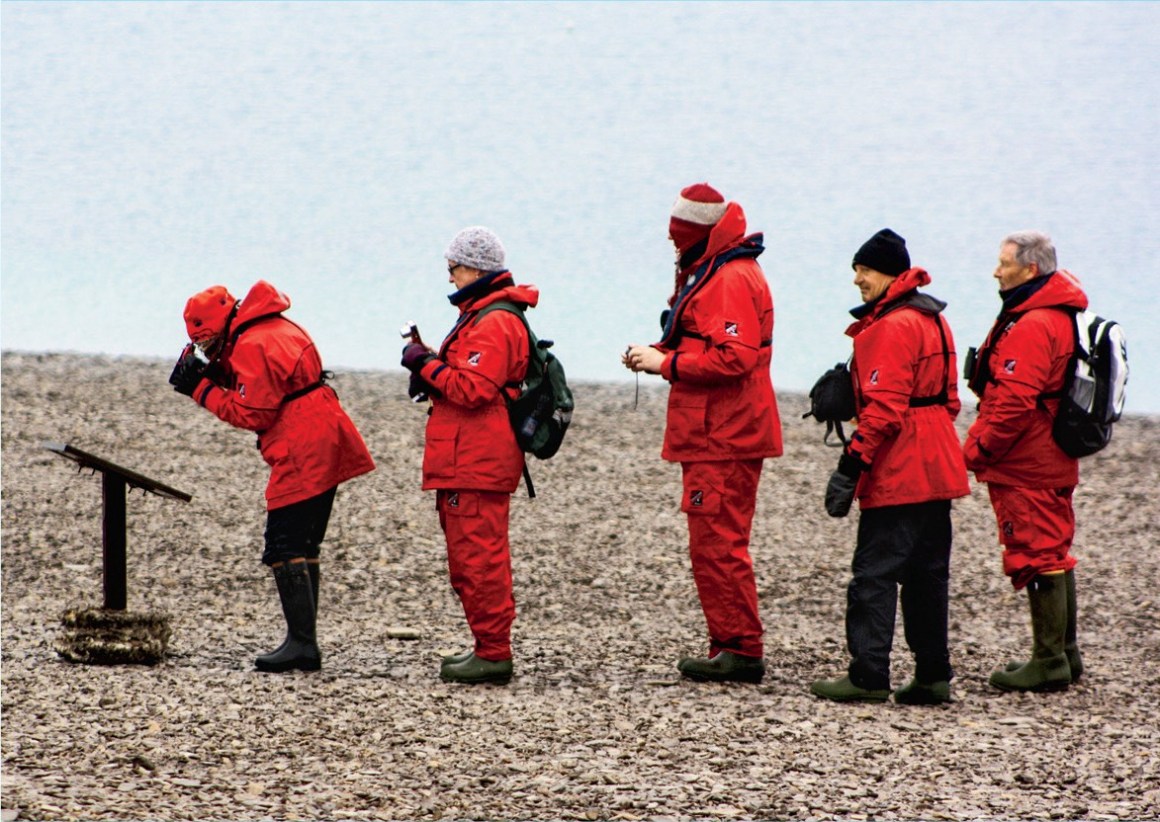
Lining up for a plaque on Beechey Island in the Canadian Arctic Archipelago of Nunavut, Canada.

The writer Eva Holland took a small-ship cruise through the eastern Northwest Passage in the Canadian Arctic for Pacific Standard‘s May/June 2016 issue. She described an Arctic leisure industry growing rapidly thanks to melting Arctic ice, which leaves the route more easily navigable during the summer months. But is all that sailing a good thing? In September, the largest luxury cruise ever completed the journey, with some 1,700 passengers paying over $19,000 per berth, prompting experts to worry about a Titanic-style disaster in a region with little public-safety infrastructure. “The Northwest Passage is thousands and thousands of nautical miles with absolutely nothing,” the boss of one Finnish shipping firm told Reuters.

Explore more stories from the March/April 2017 issue of Pacific Standard.

Related Posts

Prisons have no incentive to pay inmates better—to the contrary. Unlike workers in the free market, who (theoretically, anyway) can weigh factors like pay, working conditions, and other benefits when deciding where to work, inmates do not have a choice between employers. If they need the money, or the experience, they must take or leave what the prison is offering.

The Death Penalty in America: A Lethal History

In colonial Virginia, authorities could hang settlers for a crime as small as stealing grapes or killing a neighbor's chicken. The penal code in America's first colony was, in fact, so harsh its governor eventually reduced the number of capital offenses out of fear that settlers would refuse to live there. Since then, the number and severity of crimes punishable by death in the United States have fluctuated; today, the death penalty is still legal in 31 states. Here are some of the critical turning points in the history of capital punishment in America.
See More